Less Can Be Better
Commit to the Lord whatever you do, and he will establish your plans. Proverbs 16:3 NIV
Wow! As I look out my windows, the signs of spring are popping out all over. Our perennials and trees are making a strong comeback from that nasty spring freeze in March. Lots of plants are showing off their spring colors, and the trees are budding out nicely, except for one, my favorite red maple.
We are blessed to have four lovely mature trees in our yard. Our large pin oak graces the front yard, a treasured old bur oak sits between our neighbors and us, and two red maples are at home in the back yard, waiting patiently to show off their fall colors.
When we moved here over ten years ago, those maples were still just teenagers, about fifteen feet tall, and their growth was mostly upward. In the intervening years, they’ve probably doubled in height and begun a more mature spread, turning the backyard from a sunny space into a very shady one. The trees stand about forty feet apart and, for a number of years, they flanked a large island of perennials. We removed that bed a few years back, but the watering of all those perennials, along with the mulch that covered the bed, helped to create a condition not uncommon to maples called girdling roots. The term girdled may have been borrowed from the corsets worn by ladies of a bygone era, in that they tighten around the body to restrict the waistline. Girdling roots circle the base of the tree and continue to grow tighter, restricting the flow of water and nutrients, essentially strangling the tree.
 Improper planting can also cause girdling to occur. If a tree, or any plant, has been in a pot long enough to become potbound—that is, with roots circling around the plant because the pot won’t allow them to spread outward—you must break those roots apart and spread them out before planting, so they can grow properly away from the base of the plant.
We made it easy for our tree to obtain water at the surface of the ground, and small roots formed there, hidden under the mulch. It wasn’t until the landscape bed was removed that we realized we had acquired a mass of these roots climbing over each other, resembling a sort of snake’s nest in appearance. This tree typically sprouts leaves before the other maple in spring and drops them later in the fall, providing a prolonged period of beautiful color. Last fall, the sequence reversed. The other maple was absolutely lovely, but my favorite tree just turned brown and dropped its leaves. This spring, it’s sprouting new leaves much later, and they are small and unhealthy in appearance. Intervention is required.
So, we’ve been researching, and Ken is currently attempting to cut as many of the girdled roots away from the tree as he can. They are not just keeping our tree from reaching its potential. If they aren’t removed, it will slowly die. We hope to avert that.
And, of course, those strangling roots made me wonder how much my spiritual roots are being strangled by the girdling effect of the distractions in my life. They don’t necessarily have to be negative distractions; losses of relationships, illness, or financial issues. We can become distracted by overcommitting to good causes, like taking on an extra class when we don’t have time to keep up with the other ones, accepting new leadership roles when we’re already bogged down, and taking on new volunteer opportunities, prompting the erosion of our efforts in others we had started.
Too many commitments can weigh us down with responsibility so that our spiritual roots are strangling, just like that maple tree in our  backyard. We all require downtime to be the people God meant us to be. We need the nutrients that can only be supplied by spending time in the Word and talking with Jesus. The next time you’re asked to accept a new commitment, take a good look at what you’re already doing and be sure that you can continue to flourish by adding something new. Or maybe you could choose to drop a current project and take on something new and different that would be more fulfilling.
Think about a maple tree struggling with girdling roots each time you consider adding more to your plate. Sometimes less is better.
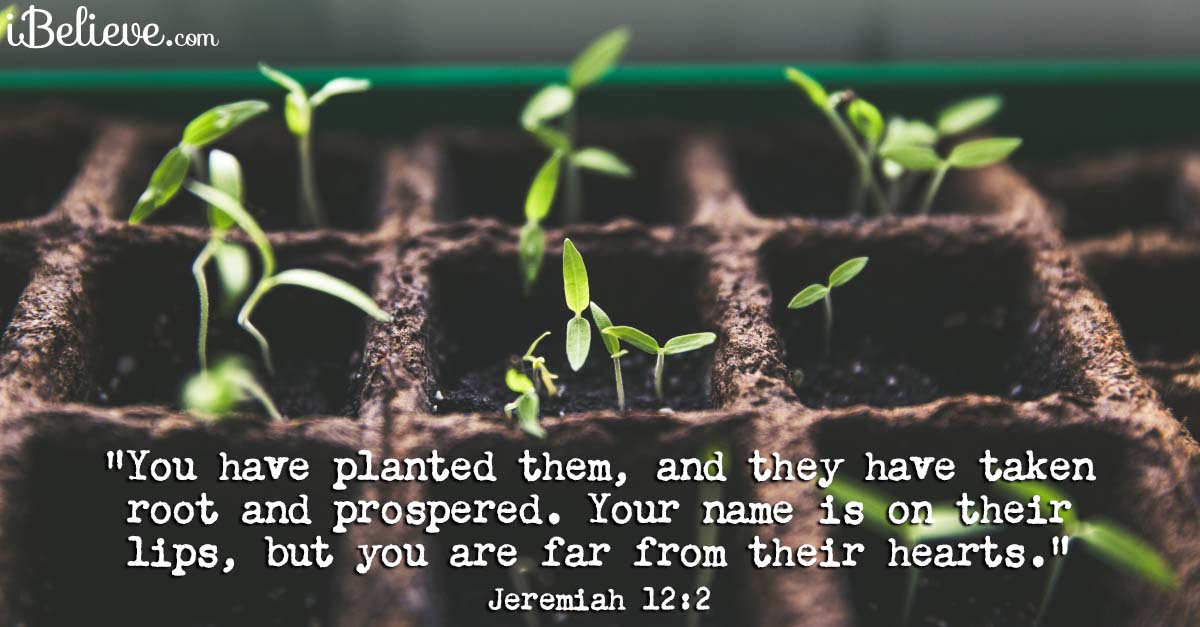
You have planted them, and they have taken root, they grow and bear fruit. Jeremiah 12:2 NIV
Read more...
Gardeners Woes and Jesus’ Loving Promise
The Lord God made all kinds of trees grow out of the ground—trees that were pleasing to the eye and good for food. Genesis 2:9 NIV
I don’t know about you, but I’m feeling just a little bit short-changed this spring. Those balmy days we enjoyed in January and February cost a hefty price. Unfortunately, when we experience unseasonal warmth, our plants and trees are tricked into thinking spring has arrived. Roots become restless, eager to form new growth, and before we know it, green is popping out everywhere. Native Missourians know that frost and freezes are not finished with us in those early months, and we don’t typically plant our annuals until late April or early May. But trees and perennials react to temperature changes and often begin their spring growth too soon, resulting in lost blooms and also lost food crops.
That little extended shot of polar air we endured in March certainly did a number on our spring bloomers. Thanks to the early warmth, my daffodils, hyacinths, and a few crocus bloomed early and, therefore, beat the cold. But any blooms still on them were quickly wiped out. I lost all my tulip blooms. Even the sedums, which can withstand almost anything, were badly damaged. Day lilies, Columbines, Dianthus, and Iris were all cut down to the ground and made to start over again. And our poor lilac bush had one lonely bloom cluster. It was looking so ragged that Ken cut back all its limbs except for this year’s new growth. What a bummer!
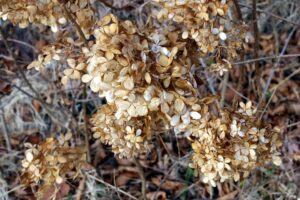 Our garden plants were not the only things that took a hit. Most of the native redbuds were caught mid-bloom and turned brown immediately, as did the forsythia. The dogwoods waited until after the freeze, but were not as full and beautiful as they typically are. Just about anything that popped out early had some level of damage.
Losing a season of blooms won’t matter to everyone, but to a gardener who is enjoying a pretty advanced season of life, as I am, it does not want to lose a spring bloom. We know our springs are limited. And I do love spring. It holds so much promise.
Thankfully, the later-blooming perennials are all well because they had the good sense to keep their little noses in the ground until after the freeze, but everything that got in a hurry took a very hard hit. The good thing is that they will come back next year, perhaps even stronger, because they have an extensive root system that burrows deep.
The one plant that came through unscathed was my Lenten Rose. After all, it stays green all winter and starts to bud in January. The cold is no match for its tenacity, and I’m pretty sure that’s why it’s called a Lenten Rose. It can overcome anything, just like Jesus! If we bury our spiritual roots deeply in Him, life is filled with countless blessings. Even when things aren’t going the way we might like, He always has something good waiting for us just around the corner. I’m continually amazed at how He can help us to find love and laughter even in the midst of hard times. And just like my perennials with their tough, deeply tapped roots will come back stronger after a setback, so will we if we place our trust in the One who is always on our side. He loves us so much that He willingly sacrificed everything to secure a home for us with Him forever. Could there be any greater promise?
Let your roots grow down into him, and let your lives be built on him. Then your faith will grow strong in the truth you were taught, and you will overflow with thankfulness. Colossians 2:7
Read more...

A Blueprint for Life
Jesus’ death was not the result of a panicking, cosmological engineer.
The cross wasn’t a tragic surprise…..
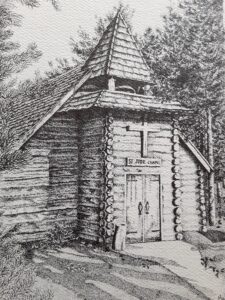 Since I was very young, I’ve had a deep love of just about anything artistic. I’ve worked in pencil, pen and ink, charcoal, and pastels. Ink is my favorite medium, but I enjoy the others as well. And, no, I don’t paint…unless you count walls and furniture. For some reason, painting has never attracted me, but I love to admire the pieces that others accomplish, and I especially enjoy soft watercolor works.
Art comes in many packages. Graphic arts are quite popular today. Many art collectors have a focus on impressionistic pieces, while others are into realism. I fall into the latter category. My work has always centered on nature or architectural structures. And just for fun, I love to create floor plans for homes I could enjoy inhabiting.
When imagining a home layout, many details must be considered. How many rooms are needed, and how will they be used? Do I want a bright home with lots of windows, or is privacy a greater concern? Where do I need a hot and cold water supply, and how can I make the delivery system as efficient as possible? Do I have special electrical needs beyond the normal supply? The list goes on. When I feel every consideration has been dealt with, I draw a simple—I do stress the word simple—blueprint, and I have a stack of them. I‘m not an expert; it’s just a fun little hobby of mine.
Ken and I enjoy checking out the local estate sales where he can almost always find some rusty tools to restore, and while I shop for interesting accessories, my attention is typically drawn to the layout of the home. The items we find within the homes create a blueprint of how the former residents lived; their careers, the hobbies they enjoyed during their leisure time, and often the faith that carried them through life’s valleys. Every home has a story to weave, of secrets hidden away, of laughter and tears, of dreams dashed and dreams fulfilled.
My blueprints are on a very small scale and are simply products of a little daydreaming, but there is a massive blueprint known only to God, and it originated before time began. When Noah and his ark were not yet placed upon the flood waters, before David met up with Goliath, and before Moses was chosen to corral the Nation of Israel in the desert for forty years, God created a blueprint for the earth and all its inhabitants, human and non-human. That plan included a sacrifice greater than our meager minds can comprehend.
….the moment the forbidden fruit touched the
lips of Eve, the shadow of a cross appeared on the horizon.
And between that moment and the moment the man with the mallet placed
the spike against the wrist of God, a master plan was fulfilled.
Read more...

Hope Is Born Again
When God entered time and became a man, he who was boundless became bound. Imprisoned in flesh. Restricted by weary-prone muscles and eyelids. For more than three decades, his once limitless reach would be limited to the stretch of an arm, his speed checked to the pace of human feet. Lucado, He Chose the Nails
I could call it an ordinary day; in human terms, it was, in fact, a busy time of great importance. You see, a Roman edict had been spread throughout the Empire that all who dwelled within its borders must travel to their ancestral homes to be counted for tax purposes. That’s how a young, tired, and probably very dusty couple came to be in the town of Bethlehem. Wouldn’t you know that the baby she carried decided to be born into all that confusion, and no one, except the cattle and sheep in the stable with them, even noticed. The locals were too focused on making a few bucks while all the travelers were in town, and the travelers were visiting family members they hadn’t seen in ages and making preparations to return to their homes.
But the angels noticed, and they kicked up quite a fuss, lighting up the sky and scaring a group of lowly shepherds, who then travelled to see this special baby. And that is the short version of how the “hope” of the world was born.
 After being circumcised, visited by the Magi, making a mad dash to escape the evil King Herod, and returning home only to find that danger still lurked, Jesus was finally settled with his family in the town of Nazareth. And there, he quietly grew to be a man. Other than one story of the twelve-year-old being lost during a journey and then found by his parents, where he was teaching in the temple courts, we know only what our imaginations can conjure about how “hope” spent his first thirty years. It was then that his ministry began. Often, his encounters with the people of the area where he preached brought more questions than answers. “Who is this man?” “How can he call himself the Son of God?” “He doesn’t really heal people, it’s all a sham!” And yet, many followed and heard his stories and believed he was something special, even if they weren’t quite sure exactly how he was special. But they would know soon.
When the time came for him to complete his ministry, he left his disciples, again with questions, left his mother, who had followed him over many dusty miles, and voluntarily walked to his own cross. Oh yes, there were moments of anguish, but he remained dedicated to his pre-ordained purpose. And then he was gone. After all his promises of eternal life, all his parables, all his miracles, he died. Just like any other man nailed to a cross, he died. His close followers were shocked, dismayed, and in denial. They loved him—they treasured their moments with him, but he was gone. The hope of the world had died that Friday!
And aren’t we blessed to know the rest of the story? We know about Sunday morning, the empty tomb, when Mary Magdalene, shocked to find the body gone, went in search of Peter and John. They raced to the tomb and wondered where their Lord had been taken. The other disciples, who had scattered to the wind in their escape from any known association with the man called Jesus, came tiptoeing back, one by one. Was it curiosity or a tiny shred of hope that he might yet be alive? We’ll never know… but we do know they still hid behind locked doors. Jesus, however, no longer needed doors. He simply appeared from the other side of the wall, and the shocked expressions on the disciples’ faces changed to joy as they began to realize he wasn’t dead at all. In fact, “hope” had been born again. And this time, it wasn’t just for the Jews, but for all mankind—you, me, our families, our friends, and even people like the criminal on the cross beside him. No matter what we’ve done, we’re still his children and worthy of his grace if we choose to follow him.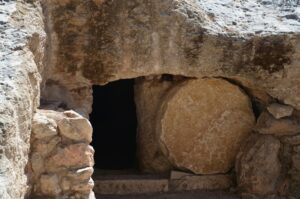
Why did he do it? What would cause him to suffer the torture and humiliation, the taunts and spitting? Only one thing…he loves us and wants us to be with him!
But you, Lord, are my shield! You are my glory! You are the one who restores me. Ps 3:3 CEB
Hope was born in an animal stall at Christmas, and many believed it died on a cross at Golgotha. But it didn’t. Hope is alive! It was born again on Resurrection Morning!
Read more...

Dirty Feet
Then he began to wash the disciples’ feet….John 13:5
Feet are definitely an underrated component of our bodies. We take them for granted and abuse them terribly until they decide to complain. We wear shoes that are inappropriate for providing good support, choosing style over functionality. We trim our toenails incorrectly, causing ingrown nails, pain, inflammation, and infection. Feet are exposed to all kinds of grime and, let’s face it, sometimes they can be downright stinky.
The average eighty-year-old is thought to walk between 75,000 and 110,000 miles in a lifetime, based on 6,800 to 7500 steps per day. The earth is just under 25,000 miles in circumference, so these figures would mean we travel a distance equal to anywhere from 3 to 4.4 times around the earth. That’s a lot of walking!
As the daughter and granddaughter of two very affected diabetes patients, I have learned to be aware of the condition of my feet. My mom and my paternal grandfather both suffered from the disease, so I became a prime candidate to inherit the genetic propensity. To date, I have no symptoms, but I continue to be vigilant. I watch my weight, try to eat a healthy diet, hydrate generously, get proper exercise and rest….just normal good health practices. I also keep a close watch on my feet. Any change in appearance or sensation gives me pause to wonder, and I have a talk with my doctor.
 On Sunday morning, as we were driving from church to the restaurant we had chosen for lunch, a red light stopped us. As we waited, watching cars zipping this way and dashing that, each going to a specific destination, I couldn’t help thinking how different it was for Jesus and His followers as they travelled to Jerusalem for the final week of Jesus’ life on earth. I’ve only been in a desert a few times in my life. I had plenty of water and was seated comfortably in an air-conditioned car. Even though I’m a pretty avid walker, I can’t imagine how they endured walking everywhere they went. And they did it through dry, filthy sand with only sandals on their feet, not always knowing where water would be found or if it would be fit to drink. By the end of the day, their feet were a grimy, nasty mess, sore and tired, covered in calluses, much in need of a cool, refreshing bath and a deep massage that likely didn’t happen. Based on the region Jesus covered during his three-year ministry, it’s been estimated that his average walk each day was about twenty miles, more on some and less on others.
Considering the conditions of the land the people of Jesus’ time inhabited, it’s easy to understand why the ritual of foot washing was so necessary. When a landowner finished his work for the day, he was met at the door by the lowliest of his servants, basin in hand, ready to cleanse the feet of his master.
But when Jesus entered the upper room to dine with his disciples, covered in an apron and carrying a basin of water, his best friends couldn’t really believe what they were seeing.
Why would he, their teacher and mentor, stoop so low as to wash their grimy feet? His hands had shaped the planet, and one day every nation would kneel at his feet. But now, he washes their feet. Why?
He wants his disciples to know how much he loves them. Max Lucado
Make no mistake, this message was not just for his disciples…oh, no! It was for every one of us. If we don’t allow him to cleanse us from all the grime of our past sins, we will never know peace and will not be allowed to enter the Kingdom of Heaven.
“No.” Peter protested, “you will never wash my feet!” Jesus replied, “Unless I wash you, you won’t belong to me.” John 13:8 NLT
This was just one step toward his journey to the cross, but a monumentally essential one if we choose to know him as our friend. He’ll take all our baggage and wash it away, white as snow, and make himself at home in our hearts, if we let him! Are you ready to have your dirty feet washed?
Read more...

The Influencer
Trust in the Lord with all your heart; don’t rely on your own intelligence. Know him in all your paths, and he will keep your ways straight. Proverbs 3:5-6 CEB
Influencer is a term we hear often these days, and I wondered about its origins, so I googled it, of course. It seems influencers were around as early as the 1700s, but the term was used in reference to sales marketing. It wasn’t until between 2012 and 2015 that the internet had us searching for a job title for bloggers and social media personalities. With this definition as its source, by 2019, the word “influencer” was officially added to the Merriam-Webster Dictionary.
You can’t live on this planet and keep up with news or social media without being touched by an “influencer.” News anchors share their opinions rather than presenting factual news. Celebrities, be they actors, musicians, or athletes, express opinions without filter on all social media platforms. Politicians communicate through social media, sometimes becoming quite brutal. Activist groups use social media to attract crowds wherever there happens to be an event that doesn’t agree with their agendas. Even some religious leaders have been known to overdo the personal influence factor. There is an influencer everywhere we turn.
To be fair, our first encounter with influencers begins at birth when our parents have total control over our lives. Then we add in siblings, extended family, and neighbors.
 A few years into our lives, we’re hauled out of the comfort of home and off to school, where teachers quickly assume the influential role. As we progress through primary and intermediate levels, more and more influencers outside of home become dominant in our lives, especially peers. Until high school graduation, family members are still around to offer guidance and advice. But after graduation, life really changes. We must face whatever comes and make our own decisions. The influencers in our lives will impact every single one of those decisions.
If we’re off to college, professors pick up the mantle of influencer, and peers pose countless challenges. If the military is our choice, I don’t think there are too many drill sergeants who will allow us to make our own decisions. If we choose a specialized trade or any job working for someone other than ourselves, our boss will have a major influence on the way we perform, at least on the job. And let’s face it, in one way or another, we all become influencers, but what kind of influence do we project?
If, by this point in your life, you haven’t dressed yourself in the full armor of God and become a close friend of Jesus, you’re likely to find yourself in a heap of trouble. The temptations will come, and decisions will have to be made. If you don’t have a good faith background, you can easily fall prey to any number of scams or simply wrong ideas made popular by influencers.
But it’s never too late, and many of the influencers we encounter throughout our lives are good ones. Jesus was, and is, the most powerful  influencer of all time, and He has always accomplished his purpose quietly. He won’t coerce you. He’ll stand outside the door of your heart and wait. It’s your decision to open the door, but once you do, you will have a friend forever. And He will equip you to be a strong influencer yourself, one who by example leads the people surrounding you, literally or virtually, to the real truth that lies within our faith.
So, when you find yourself at a questionable crossroad or prepare to make that next social media post….. Listen to Jesus. Take care to ensure that you are a good and faithful influencer.
Your own ears will hear him. Right behind you a voice will say, this is the way you should go…..Isaiah 30:21 NLT
Read more...

Questions and Answers
Whom shall I send…..Here I am; send me. Isaiah 6:8 (NLT) 
A storm was brewing to the south and west of us. Forecasters had warned us for days that all the indicators were coming together to suggest a very rough night….but, how bad would it really be? We’d prepared our safe room by adding bottled water, non-perishable snacks, flashlights, batteries, a change of clothes for each of us, and a few important small things we didn’t want to lose. Our phones were fully charged. By late evening news time, our local forecaster said that the storm appeared to be weakening and was making some slight course corrections. Maybe it wouldn’t be so bad after all. A little complacency set in until that familiar shrill warning sound came screaming from my phone beside the bed! It was time to get into our safe room!
Not a bad beginning, but in order to make my point, let’s try that paragraph without capitals or punctuation, then imagine reading a three-hundred-page book that way.
(a storm was brewing to the south and west of us forecasters had warned us for days that all the indicators were coming together to suggest a very rough night but how bad would it really be wed prepared our safe room by adding bottled water nonperishable snacks flashlights batteries a change of clothes for each of us and a few important small things we didnt want to lose our phones were fully charged by late evening news time our local forecaster said that the storm appeared to be weakening and was making some slight course corrections maybe it wouldnt be so bad after all a little complacency set in until that familiar shrill warning sound came screaming from my phone beside the bed it was time to get into our safe room)
 This illustration shows how simple writing tools add impact and clarification to a string of words that otherwise are very difficult to assimilate. A sentence ends with a period, a question mark, or an exclamation point, and a new sentence begins with a capital letter. You can also use CAPS to emphasize a point, as in a text, WHERE ARE U? And they also offer respect to the proper names of people and places.
A period simply indicates that a portion of the work has ended. A question mark is self-explanatory. An exclamation point indicates surprise, wonder, awe, or even fear. It is often preceded by the word “Wow!” And that can be good or bad. Quotation marks indicate a dialogue between two or more speakers, or they can attribute a quote, but I tend to use italics for my quotes. Apostrophes allow us to contract two words into one or to indicate possession. I often use a series of periods or a long hyphen—to indicate a break in my thoughts, a time period in between two thoughts, or a portion of a quote omitted. Parentheses did not appear in my sample paragraph, but I often use them for further clarification of a grammatically correct sentence. And then there is the comma, an indication to pause, an effective tool to separate words, phrases, and thoughts.
Let me tell you, on a computer, writing even a paragraph incorrectly, void of any capitalization or punctuation, is no easy feat. AI would not allow me to use the word I in the lower case, and it constantly corrected my many intentional errors. However, even though it wants to be a substitute for our creativity, we must check it thoroughly because no matter how hard it tries, it just can’t mimic the “human factor.”
And, as is typical of my messages, there is a purpose behind my rhetoric. You see, I believe that God uses capitalization and punctuation in every aspect of our lives. His many names are capitalized to recognize His ultimate authority. Sometimes, He places a period in our way, a hard stop, a warning to go no further. And then, He may leave us with a question to answer about our future, our blessing of free choice. Each morning, He provides the wonder of the sunrise and adds the sunset as the exclamation to our day. This teaches us about gratitude. He often provides very pregnant pauses between our requests….and His responses, a lesson in patience. And many times during our days, He inserts commas to offer us opportunities to pause, to think, and to reason, possibly to reconsider a course we’ve embarked upon or been tempted to take. Each of His punctuations is a reminder that He is always there and caring for us.
I love the phrase, “It gives me pause.” It makes a comma seem like a well-placed gift, an opportunity to do better, be better.
I think I’m facing a defeat or an end. But it’s only the Lord’s comma—a pause, not an end. (Pray a Word a Day from Guideposts
Read more...

Grief Stings
It is Sunday as I write. It’s been a week since the silence of a laid-back afternoon was shattered by a shrill, screaming alert on our phones. We grabbed for them simultaneously and found a blue alert regarding a truck that was being sought by law enforcement. A little bit later, as Ken was checking for messages and news, he learned the reason for the alert. Evil had certainly come to our little corner of the Ozarks. A Christian County Deputy had been shot and killed during a traffic stop, and the search was on for the owner of the truck that had been revealed by cameras. We all know how that tragedy played out in the dark of night.
Late in the week, we were told that the US and Israel had commenced air strikes on Iran. That news sparked unrest throughout the world, as we would expect, and mass shootings have now occurred on US soil. Is this the beginning of the end? I can’t answer that question. Nor can you or any of the many who try to predict what God will do. Only He knows when our final hour will come. But the message He gives to us for the time that we walk this earth is clear:
Don’t let evil conquer you, but conquer evil by doing good. Romans 12:21
It’s a very simple message, but one whose mission is very difficult for humans to implement. We want to have revenge; feel we are entitled to it. But in the face of evil, we are told to show goodness, to be the light of Christ in this troubled world. The challenge is great, and we cannot meet it alone, but the Creator will share His strength with us if we ask for His help and obey His word. More than ever, we must make the choice as to whose we are.
In any tragedy, those left behind are at the beginning of a journey, one of deep mourning and tremendous loss. They will pass through many stages in their grief. But someday, when the hurt and anger have settled, when the weight of the tragedy lightens a bit, and they seek to move on, then comes the hardest part. They must choose whether or not to forgive the transgressor.
 Forgiveness is a hard, hard step to take, especially during very emotional circumstances. But, if we are to have true healing and the freedom to move forward, forgiveness must be a part of the process. Jesus said it all when He hung on the cross:
Father, forgive them, for they do not know what they are doing. Luke 23:34
Just as Jesus interceded and asked forgiveness for those who tortured him, we are to forgive those who hurt us. We tend to believe that forgiveness absolves the one who has hurt us, if we’re honest, we often want their guilt to continue. But we must remember that we can’t control how our transgressor will respond to an offer of forgiveness. We can only control our own actions. The man who committed his hateful act in our community last week has already sealed his fate. But his victims—the families, friends, colleagues, and even those of us who grieve on the sidelines—have a choice to make, to heal or to hold on to the evil. I pray we will be like Jesus—and be His Light in the world. Out of evil, God has brought goodness. He did it before—He can do it again
Read more...

Wedding Planning
…there was a wedding celebration in the village of Cana in Galilee. John 2:1
The first of our grandchildren is planning a wedding in December, so there is a bit of excitement in our oldest daughter’s home. Contrary to Ken’s and my personal experience, it seems the first obstacle in planning a wedding these days is securing a venue. Getting the desired space requires a lot of patience and usually a wait of a year or more, maybe even two years. Whatever happened to holding a wedding in a church and a reception in the church activity center? Planning the event is a huge investment in time and money, usually resulting in mountains of stress along the way. I’m glad we were married in simpler times. Traditions change, but the key to a happy and satisfying life as a couple is to focus on the marriage more than the wedding.
 More than two centuries ago, when Jesus walked the earth, wedding traditions differed greatly from those of today. First, the father of a prospective groom searched for a match he thought appropriate for his son. He then visited the father of the woman who’d been chosen and suggested a union between their offspring. If the father of the woman agreed, the two would then negotiate a “bride price.” Yes, the father of the groom essentially “bought” a wife for his son. This price could be offered as money or goods. Once an agreement was formalized, the couple was considered betrothed, which was nearly as binding as marriage, except the union was not yet consummated.
After negotiations were completed, the groom remained with his family to build a new home for his wife, typically an addition to his father’s home. Perhaps a year or so later, (This is the one part that is similar to today), the families would gather together for about a week of wedding feasting before the final vows were taken and the couple was officially married. Weddings were a time of great celebration; much food and wine were consumed as families and friends shared the joy of the occasion.
The wine supply ran out during the festivities, so Jesus’ mother told them, “They have no more wine.” John 2:3
It was during one such time of feasting that Mary, mother of Jesus, arrived in Cana, a small town in Galilee less than a day’s travel from her home. There is a supposition that her inclusion in the wedding festivities suggested that Mary was a relative of either the bride or groom. Jesus and his disciples were also in attendance. Not long after their arrival, Mary realized that wine was running short and, not wanting the host family to be embarrassed, she went to Jesus and told him of the situation. At first, he told her it was not yet time for him to reveal his ministry, but then he reconsidered, and when servants brought six large empty jars to him and filled them with plain water, he changed it to the finest of wine. The master of ceremonies knew nothing of Jesus’ intervention as he praised the bridegroom for saving the best wine for later in the festivities, but the servants and Jesus’ disciples had witnessed the miracle that had saved the day.
When the master of ceremonies tasted the water that was now wine, not knowing where it had come from (though, of course, the servants knew) ….”A host always serves the best wine first,….but you have kept the best until now!” John 2:10 paraphrased
This story is recorded as the first miracle of Jesus’ three-year ministry, and certainly it is an important event in that regard. But I think it also shows us another side of this man, Jesus. He came to a wedding to celebrate a special time with family and friends, to share food and laughter. He enjoyed the typical social life of his culture and financial status. He was one of them and so approachable that people quickly came to love him. They clamored to see him and hear him teach. Without a personality that endeared him to everyday people, he would not have built such a following. Yes, at that wedding, Jesus performed a miracle and began to establish himself as the long-awaited Messiah. He also demonstrated compassion toward his host. He knew how to treat people and how to create joy. Those are traits we should all try to emulate. We may not be able to perform miracles, but we can certainly love more like Jesus.
So now I am giving you a new commandment: Love each other…..your love for one another will prove to the world that you are my disciples. John 13:34-35
Read more...